About Alexander Kluge
About Alexander Kluge
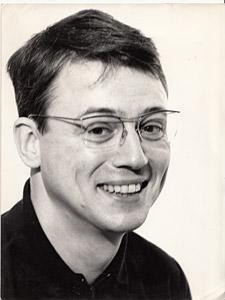
Alexander Kluge (1932-2026) was one of the leading intellectual and creative voices in Germany from the 1960s through the first quarter of the 21st century. Once described as “Adorno’s favorite son” (O. Negt), Kluge created a vast and variegated body of work that can be regarded as a continuation, in word and image, of the Critical Theory of the Frankfurt School.
Kluge was prodigiously productive through to the final weeks of his life, as a writer, filmmaker, and visual artist. In the past decade of his life, he turned his attentions increasingly to public exhibitions in museums and galleries. To name just a few of these events: In 2018 Kluge mounted the large-scale Pluriversum/Pluriverse exhibition at the Museum Folkwang in Essen that showcased film and video work, text, and images, and in the same year he collaborated with photographer Thomas Demand and stage designer and director Anna Viebrock on a show for the Venice Biennale (“The Boat Is Leaking. The Captain Lied”). Kluge’s newer video works were included in a 2023 exhibition at the Uffizi Galleries in Florence on the legacies of art historian Aby Warburg. And in early 2026, he staged an exhibition at the Academy of Fine Arts in Vienna (“At Night the Backdrops Dream of Unseen Images”). He published extensively in these years as well, often in collaboration with major visual artists, working with Katharina Grosse, Georg Baselitz, Gerhard Richter, and Anselm Kiefer, among others on books that combine images with literary and philosophical texts. In 2018, Kluge published The Snows of Venice with the acclaimed American writer Ben Lerner, pairing Lerner’s poems with stories by Kluge. Also in this period, Kluge published Russland-Kontainer (2020; Russia Container, 2022), Das Buch der Kommentare. Unruhiger Garten der Seele (2022; The Book of Commentary / Unquiet Garden of the Soul, 2023), and Zirkus / Kommentar (2022; Circus / Commentary, 2024) and much more. In the last years of his life, Kluge engaged extensively in pioneering and extremely thoughtful experimentation with image-making mediated by generative artificial intelligence. His 2024 book The Dragon-Fly's Eye: My Virtual Camera (AI) presents Kluge’s philosophical reflections on this process and the role of chance and error in creating openings for the imagination. Kluge’s work with generative AI also surfaces prominently in both Sand und Zeit [sand and time] (2025)—an image-rich meditation on war, historical time, and silicon—and the last book published in his lifetime, Schattenrisse der Macht: Ein Zwölf-Cäsaren-Kommentar [silhouettes of power: a twelve caesars commentary] (2026).
Early on, Kluge had already achieved renown in the early 1960s as both a literary writer and a film director. His film Abschied von gestern (released in the United States as Yesterday Girl) won the Silver Lion at the Venice Film Festival in 1966, the first German entry since 1945 to garner the prize. Kluge’s 27th film played in cinemas in 1987. To call him “the German Godard” is to come close to capturing Kluge’s broadly influential and stylistically innovative work as a filmmaker. Without Kluge in the role of organizer and moderator, the “New German Cinema” of the 1970s (Fassbinder, Herzog, Schlöndorff, et al.) would never have attained the international standing that it garnered in those early years and retained well beyond.
Kluge’s first volume of narrative stories, Lebensläufe, published in 1962 (translated as Case Histories, Holmes & Meier, 1988), traces the breaks and discontinuities of 20th-century German life stories (someone born around 1900 lived for example under four states by the age of 60). This was followed in 1964 by Schlachtbeschreibung (The Battle, McGraw-Hill, 1967), Kluge’s experimental montage novel about the Battle of Stalingrad. Together they established Kluge for many as the inventor of a new type of documentary method. And yet, for Kluge, there are no facts that are not laden from the start with fantasies, emotions, memories, wishes, and protest. Objective truth for him is not to be found in objectivity alone, but in the interrelation between the objective and the subjective. “The most objective thing of all is the subjective,” Kluge wrote in one of his most baffling statements. For Kluge, human nature, in which characteristics such as “primal trust,” “hunger for meaning,” and the pursuit of happiness are firmly entrenched, is a hard fact in the same way that beauty and cruelty of external nature and of history are factual. By the time of his passing, Kluge had published more than a dozen major volumes of stories at the crossroads of historical reflection and radical literary experimentation. He has received all of Germany’s important prizes for literature, as well as film prizes in Venice, Cannes, and Berlin and the city of Frankfurt’s Adorno Prize for distinguished work in film, philosophy, and music.
The weekly “Culture Magazines” that Kluge produced for television beginning in 1988 likewise stand out as exceptional offerings amidst the medium’s commercial fare. For 25 years, Kluge produced two or three broadcasts each week of 15, 25, and 45 minutes in length, a total of about 1,700 hours of broadcast time. With segments covering books, film, and opera, the programs hint at what television could be if it were produced according to the criteria of auteur cinema. Thematic barriers are nonexistent: whatever is interesting in art, science, or philosophy should have a place on television, as Kluge repeatedly demonstrated.
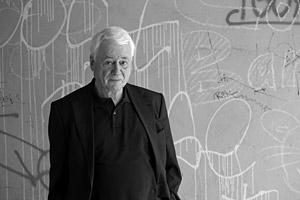
Alexander Kluge
Photo: Markus Kirchgessner
With Kluge’s express permission, Cornell University’s online collection documents three seasons of the “Culture Magazines,” featuring Kluge in conversation with some of his most prominent colleagues, intellectuals of Kluge’s own stature, and presents a wide range of his filmic and televisual output. We are pleased to offer a selection of the feature films directed by Kluge between 1965 and 1985, Kluge’s Serpentine Gallery Program, a collection of short films produced between 1995 and 2005, as well as his 2008 Nachrichten aus der ideologischen Antike: Marx – Eisenstein – Das Kapital (News from Ideological Antiquity: Marx – Eisenstein – Capital). The latter was Kluge’s ambitious realization of a plan, first proposed by Sergei Eisenstein in the 1920s, to make a film of Marx’s Capital. Two late feature-length films by Kluge, Cosmic Miniatures (2024) and Primitive Diversity (2025), both showcasing Kluge’s experiments with generative AI, are also offered here, along with a diversity of other recent material.